

Central Park New York, USA
In the heart of Manhattan lies a masterpiece of landscape architecture, a living sanctuary that merges nature with the rhythm of one of the world’s busiest cities, Central Park (New York, USA). This magnificent urban oasis extends over 843 acres, framed by towering skyscrapers and iconic avenues, serving as both a refuge for residents and a magnet for millions of travelers who wish to experience New York City’s cultural pulse in its most natural form. Conceived in the mid-nineteenth century, Central Park represents a triumph of human design over chaos, harmonizing structured beauty with organic wilderness. Its creators, Frederick Law Olmsted and Calvert Vaux, envisioned more than a mere park; they designed a living landscape that reflected democracy, art, and the human spirit.
From the soft meadows and tranquil lakes to the bustling carriage drives and grand architectural structures, every corner of Central Park tells a story of transformation, resilience, and artistic brilliance. It is more than a public space; it is a cultural chronicle, a historic arena for public gatherings, concerts, protests, and celebrations that have defined New York’s social life for over a century and a half.
For travelers who seek destinations that combine cultural richness with natural serenity, the park offers an experience similar to other grand natural and cultural preserves, such as Channel Islands National Park (California), where history and nature intertwine in perfect harmony. Central Park remains an essential chapter in the story of New York City, standing as a testament to visionary urban planning and humanity’s enduring desire to coexist with nature, even amid a sea of concrete.
Best Time to Visit (Latest Information – 2025 Updates)
Central Park is a destination that changes its face with every season, offering an entirely new experience depending on when one visits. As of 2025, the park continues to attract millions year-round, yet certain months provide distinct advantages for travelers seeking specific experiences.
The spring season (April to June) transforms the park into a canvas of color. Cherry blossoms near the Reservoir and tulips along the Conservatory Garden bloom in vibrant hues, filling the air with fragrance. This is the best time for photography, leisurely walks, and guided historical tours.
Summer (July to early September) brings Central Park alive with open-air performances, music festivals, and Shakespeare in the Park at the Delacorte Theater. Visitors can enjoy boating at the Loeb Boathouse or relax under the shade of elm trees along the Mall. Although the weather can be warm and humid, early mornings and evenings offer cooler, pleasant conditions for exploring.
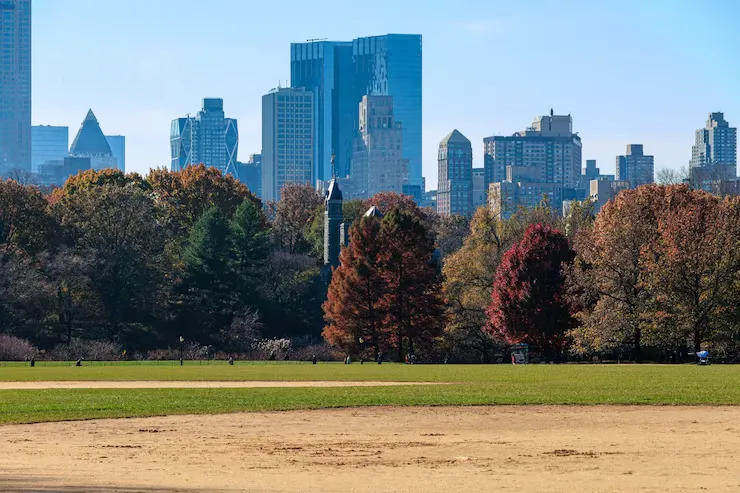
Autumn (late September to November) is the most visually stunning season. The foliage turns golden, amber, and crimson, creating postcard-perfect scenes at the Ramble and around the Great Lawn. It is also the season for the New York City Marathon, where runners from around the world cross the park’s finish line amid cheering crowds.
Winter (December to March) transforms the park into a serene wonderland. Snow blankets the fields, the Wollman Rink opens for ice skating, and the holiday atmosphere in nearby Fifth Avenue adds an enchanting glow. Though temperatures are low, the park’s charm in winter is unmatched in tranquility.
In 2025, the Central Park Conservancy continues to enhance visitor experiences with new restoration projects and improved accessibility routes, ensuring that every season remains welcoming and memorable for all travelers.
How to Reach (Flights, Road, Train, and Bus Details)
Central Park is located in the very heart of Manhattan, bordered by 59th Street to the south, 110th Street to the north, Fifth Avenue to the east, and Central Park West to the west. Its accessibility from every part of New York City makes it one of the most visited public spaces in the world.
By Air: The nearest airports are John F. Kennedy International Airport (JFK), approximately 17 miles from the park, and LaGuardia Airport (LGA), located about 10 miles away. Both airports offer numerous international and domestic connections. From JFK, travelers can take the AirTrain to Jamaica Station, then transfer to the E subway line toward Manhattan. From LaGuardia, buses and taxis offer direct routes into Manhattan, taking 30–45 minutes, depending on traffic.
By Train: Grand Central Terminal and Penn Station are the two major train hubs serving New York City. From Grand Central, visitors can take the subway (lines 4, 5, 6, or 7) to reach stops along the east side of the park, such as 59th Street or 86th Street. From Penn Station, the A, B, C, or D lines lead to the west side entrances.
By Subway and Bus: The New York City subway system provides the most convenient means of reaching Central Park. The A, B, C, D, 1, 2, and 3 lines run along Central Park West, while the 4, 5, and 6 lines run parallel to Fifth Avenue. Numerous bus routes, including the M1, M2, M3, and M4, operate along Madison and Fifth Avenues.
By Road or Car: For visitors arriving by car, there are parking garages around the perimeter, especially near Columbus Circle and the Upper East Side. However, driving through the park is restricted to specific hours and routes to maintain pedestrian safety.
By Tour or Bicycle: Many visitors opt for guided tours that begin at Columbus Circle or the Plaza Hotel entrance. Bicycles can be rented from multiple nearby shops, allowing travelers to explore the park at their own pace. Pedicabs are also available for scenic rides with live commentary from local guides.
Estimated Trip Cost (Flights, Hotels, Food, Transport, and Activities)
Visiting Central Park can accommodate every type of traveler, from the budget-conscious explorer to the luxury seeker. Costs depend on one’s travel style and the duration of stay in New York City.
Flights: Round-trip flights to New York City vary by season and origin. On average, international flights range from USD 600 to USD 1,200, while domestic flights typically fall between USD 150 and USD 400.
Accommodation: Hotel rates in Manhattan fluctuate depending on proximity to Central Park. Budget travelers can find hostels or budget hotels for around USD 80 to USD 150 per night. Mid-range options, such as boutique hotels or smaller chains, average USD 200 to USD 350 per night. Luxury accommodations like The Plaza, The Ritz-Carlton, or The Pierre can exceed USD 700 per night.
Food and Dining: Dining expenses vary widely. A light breakfast at a café near the park may cost USD 10 to USD 15, while lunch at mid-range restaurants ranges from USD 25 to USD 50 per person. Fine dining experiences, particularly near Fifth Avenue or Columbus Circle, can range from USD 100 to USD 300 per person.
Transportation: The subway remains the most affordable mode of transport at USD 2.90 per ride. Taxis or rideshares from major attractions to the park typically cost between USD 10 and USD 25, depending on distance.
Activities: Most of the park’s attractions are free, including walking trails, scenic viewpoints, and public performances. However, boat rentals at the Loeb Boathouse cost approximately USD 25 per hour, horse-drawn carriage rides range between USD 60 and USD 150, and guided tours cost between USD 30 and USD 80 per person.
A moderate daily budget for a visitor staying near the park is approximately USD 250–400, covering meals, transportation, and a few paid experiences. Those opting for luxury accommodations and dining should anticipate USD 700–1,000 per day for an indulgent experience.
Top Attractions and Activities
Central Park is not only a peaceful oasis in the middle of New York City; it is also a living museum of art, history, and recreation. From iconic monuments to hidden woodland trails, the park offers endless opportunities for discovery. Each section of the park reflects a unique blend of landscape architecture, historical importance, and cultural vitality that makes every visit distinct.
Bethesda Terrace and Fountain
One of the most magnificent architectural elements of Central Park is Bethesda Terrace and Fountain, designed by Jacob Wrey Mould and Calvert Vaux. Constructed in the mid-nineteenth century, this terrace is famous for its neoclassical style, intricate carvings, and the famous Angel of the Waters statue. The surrounding arcade, with its stunning Minton tile ceiling, is considered one of the most beautiful examples of decorative art in public architecture. The terrace often serves as a stage for musicians, photographers, and artists, reflecting New York’s creative soul.
The Mall and Literary Walk
Stretching from 66th to 72nd Street, The Mall is a straight promenade lined with American elm trees, creating a natural canopy admired by millions of visitors annually. This grand walkway leads to Literary Walk, where bronze statues of world-renowned writers such as William Shakespeare, Robert Burns, and Sir Walter Scott stand proudly. It represents the city’s celebration of literary excellence and intellectual legacy.
Belvedere Castle
Located near the center of the park, Belvedere Castle is a Gothic and Romanesque-style structure built in 1869. Originally designed as a viewing platform for scenic landscapes, it now houses the Henry Luce Nature Observatory. The castle’s stone architecture and elevated location make it a favorite for panoramic photography and a symbol of nineteenth-century romantic architecture.
The Great Lawn
A vast green expanse covering over fifty-five acres, the Great Lawn is the heart of Central Park’s community life. It hosts summer concerts by the New York Philharmonic and the Metropolitan Opera, outdoor movie nights, and numerous cultural festivals. Historically, the area once held a reservoir that supplied water to the city. Today, it embodies the park’s commitment to blending recreation, history, and urban harmony.
The Ramble and Lake
Created as a “wild garden,” The Ramble is a thirty-six-acre woodland filled with winding paths, rocky outcrops, and scenic views of the lake. It is a haven for birdwatchers, hosting more than 200 migratory species throughout the year. The Ramble’s design was influenced by the English Romantic landscape movement, emphasizing natural irregularity and ecological diversity.
Strawberry Fields
Dedicated to the memory of John Lennon, Strawberry Fields is a landscaped memorial near the Dakota Apartments, where Lennon lived and was tragically assassinated. The circular mosaic bearing the word Imagine is a global symbol of peace and unity. It draws thousands of visitors annually, reflecting the enduring influence of The Beatles on art and culture.
Bow Bridge
An elegant cast-iron bridge from 1862, Bow Bridge is celebrated for its graceful design and romantic setting. Spanning the lake between Cherry Hill and The Ramble, it offers one of the most photographed views in New York. The bridge has appeared in numerous films, making it a cultural landmark of cinematic history.
Conservatory Garden
Located at Fifth Avenue and 105th Street, the Conservatory Garden is Central Park’s only formal garden, divided into English, French, and Italian-style sections. This six-acre garden is a masterpiece of horticultural design, featuring seasonal blooms, sculptural fountains, and tranquil walkways. It is a serene retreat for those seeking peace amidst the city’s energy.
Central Park Zoo
Established in 1864, Central Park Zoo began as a small menagerie and evolved into a modern wildlife conservation center. It houses over 130 species from tropical, temperate, and polar regions. Highlights include sea lion feedings, snow leopards, and the tropical rainforest dome. The zoo’s emphasis on education and sustainability aligns with the park’s broader mission to inspire environmental awareness.
Sheep Meadow
Once used for grazing sheep, Sheep Meadow is now a vast open field for sunbathing, picnicking, and relaxation. The meadow’s skyline views of Manhattan’s skyscrapers form an iconic contrast between nature and architecture, symbolizing the city’s balance of progress and preservation.
Accommodation Options
While Central Park itself does not have hotels within its boundaries, it is surrounded by some of the finest accommodations in New York City, ranging from budget-friendly stays to luxurious five-star establishments.
Budget Options
Travelers seeking affordable comfort can stay at properties such as HI New York City Hostel on Amsterdam Avenue or Pod Times Square Hotel, which offers compact yet stylish rooms with modern amenities. Both options provide easy subway access to the park and nearby attractions.
Mid-Range Hotels
For those looking for a balance of cost and comfort, the Lucerne Hotel on the Upper West Side and Park Central Hotel near Seventh Avenue are ideal. They offer spacious rooms, fitness facilities, and convenient proximity to major subway lines.
Luxury Stays
For a luxurious experience, The Plaza Hotel at Fifth Avenue and 59th Street remains an icon of grandeur and history. Another excellent choice is The Ritz-Carlton New York, Central Park, offering panoramic park views, elegant interiors, and world-class dining. Guests seeking boutique elegance may prefer The Pierre, renowned for its neoclassical architecture and timeless charm.
Local Food and Cuisine
Central Park’s surrounding neighborhoods, such as the Upper West Side, Upper East Side, and Midtown Manhattan, feature some of the most diverse culinary offerings in the world.
Must-Try Dishes
Visitors can savor New York-style bagels, pastrami sandwiches, hot dogs, and New York cheesecake, all essential elements of the city’s culinary identity. Food carts along the park’s perimeter offer iconic street foods like pretzels and halal platters, blending global influences with local flair.
Recommended Restaurants
- Tavern on the Green: A historic restaurant within Central Park, famous for its ornate interiors and seasonal American cuisine. Originally a sheepfold in the 1870s, it evolved into a cultural dining landmark.
- The Loeb Boathouse: Located beside The Lake, it offers lakeside dining with classic American dishes and an atmosphere of timeless elegance.
- Per Se: Situated at Columbus Circle, this three-Michelin-star restaurant by Chef Thomas Keller provides exquisite French-inspired tasting menus.
- Sarabeth’s: Known for its brunch specialties, this restaurant near the park’s south gate serves freshly baked goods and artisanal preserves.
Travel Tips and Safety Advice
Visiting Central Park is a rewarding experience, but proper preparation enhances comfort and safety.
Weather and Packing
Spring and autumn are the most comfortable seasons for exploring the park, with mild temperatures and vibrant colors. Pack comfortable walking shoes, a refillable water bottle, sunscreen, and a light jacket. During winter, visitors should wear insulated clothing and waterproof footwear.
Cultural Etiquette
Central Park is a shared public space that reflects the city’s diversity. Respecting nature, art installations, and fellow visitors is essential. Photography is allowed in most areas, but drone usage requires a special permit.
Safety Recommendations
The park is generally safe, particularly during daylight hours. Travelers should remain in well-lit areas after sunset, avoid isolated sections late at night, and keep valuables secure. The Central Park Conservancy and New York City Police Department patrol the park regularly, ensuring a safe environment for visitors.
Itinerary Suggestions
Central Park offers endless possibilities for exploration, and crafting a structured itinerary helps travelers experience the park’s beauty, history, and cultural highlights efficiently. Below are curated plans for three, five, and seven-day visits, each designed to balance relaxation, recreation, and discovery.
3-Day Itinerary – Essence of Central Park
Day 1: Introduction to the Heart of the Park
Begin your exploration at the Grand Army Plaza entrance near The Plaza Hotel. Walk through The Mall and Literary Walk, appreciating the shaded path lined with statues of historic writers. Pause at Bethesda Terrace and Fountain, the heart of Central Park’s architectural splendor. Enjoy lunch at Tavern on the Green, then spend the afternoon at Sheep Meadow, a perfect spot to relax and take in the skyline views. In the evening, consider a leisurely rowboat ride from The Loeb Boathouse.
Day 2: Nature and Art
Start at The Ramble and Lake, exploring its winding trails filled with birdsong and serenity. Visit Belvedere Castle for panoramic views and continue toward the Great Lawn to witness local performers and sports enthusiasts. Conclude your day at Strawberry Fields, reflecting upon John Lennon’s message of peace and imagination. Dine at Sarabeth’s for a comforting New York-style dinner.
Day 3: Gardens and Wildlife
Visit the Conservatory Garden, a floral paradise showcasing English, Italian, and French designs. Take a stroll to the Central Park Zoo and spend time observing snow leopards, sea lions, and tropical birds. End your journey with a sunset walk along Bow Bridge, one of the most romantic and photographed spots in New York.
5-Day Itinerary – Immersive Experience
Day 1: History and Heritage
Start your trip with a visit to the Central Park Conservancy Visitor Center to understand the park’s history and ongoing preservation projects. Explore the Arsenal Building, an original nineteenth-century structure that predates the park’s creation. Visit the nearby Zoo, then unwind at The Pond, admiring the reflection of city skyscrapers on the tranquil water.
Day 2: Art, Architecture, and Culture
Stroll along The Mall, stop for performances by street artists, and explore Bethesda Terrace Arcade, where musicians often fill the air with melody. Continue to Bow Bridge and the Lake, capturing scenic photographs. Visit the Delacorte Theater if Shakespeare in the Park performances are scheduled.
Day 3: Recreation and Relaxation
Rent a bicycle to cover more ground. Explore North Woods, one of the park’s most peaceful areas. Have a picnic at Great Hill and later visit Harlem Meer, home to turtles and ducks. Finish the day at a nearby jazz club on the Upper West Side.
Day 4: Nature Walks and Hidden Corners
Visit the Hallett Nature Sanctuary, a lesser-known but beautiful reserve near the southeast corner. Continue to The Dairy Visitor Center, a Gothic Revival cottage offering maps and history. Spend your afternoon in The Ramble, taking part in a guided birdwatching tour offered by local conservancy volunteers.
Day 5: Classic Central Park Farewell
Spend your final day revisiting your favorite landmarks. Walk or take a horse carriage ride through The Mall, enjoy brunch at The Loeb Boathouse, and savor your last moments at Sheep Meadow. End your visit with a quiet reflection at Strawberry Fields, celebrating the enduring spirit of peace that defines the park.
7-Day Itinerary – The Complete Central Park Journey
Day 1: Gateway to the Park
Enter from Columbus Circle and walk to The Mall. Visit Bethesda Terrace, The Lake, and Bow Bridge, taking your time to admire the architectural harmony and intricate carvings.
Day 2: The Art and Legacy of Central Park
Explore the Metropolitan Museum of Art (just beyond the park’s eastern border) to connect the park’s cultural legacy with world art. Walk through The Great Lawn afterward, appreciating the view of Belvedere Castle.
Day 3: Historic Monuments and Sculptures
Trace the history of the park through its statues, such as Alice in Wonderland, Balto the Sled Dog, and William Shakespeare. Each monument tells a story of heroism, imagination, and humanity.
Day 4: Nature and Conservation
Take a morning yoga class near Sheep Meadow or North Meadow Recreation Center, then explore Harlem Meer and Conservatory Garden. Learn about the park’s flora and fauna through guided nature tours.
Day 5: Cultural Events and Music
Attend a performance at the Naumburg Bandshell or an open-air concert at the Great Lawn if available. Evenings can be spent exploring nearby Lincoln Center, blending the park visit with urban culture.
Day 6: Adventure and Relaxation
Rent a rowboat from The Loeb Boathouse, enjoy cycling trails, and relax at Turtle Pond. Visit Belvedere Castle again at sunset for breathtaking photos.
Day 7: The Farewell Day
Dedicate your final day to reflection. Visit Strawberry Fields, sit by The Lake, and walk toward The Pond, absorbing the timeless rhythm of the park and city life merging as one.
Final Thoughts
Central Park is far more than an urban escape; it is a masterpiece of landscape design and human imagination. From the serenity of The Ramble to the elegance of Bethesda Terrace, the park symbolizes the union of art, architecture, and nature in perfect balance. Its pathways have witnessed over a century of cultural evolution, serving as both a retreat for tranquility and a stage for creativity.
Whether you visit for a stroll, a moment of reflection, or an exploration of history, Central Park’s enduring charm lies in its ability to transform every experience into a story worth remembering. It stands as one of New York City’s greatest treasures, reflecting the heart and harmony of the people who built and preserve it.
FAQs
What is the best time to visit Central Park?
The best times to visit are during spring (April to June) and autumn (September to November), when the weather is pleasant and the park displays its most vibrant colors.
Is Central Park free to enter?
Yes, entry is entirely free for all visitors, although attractions such as the zoo or special events may have admission fees.
How large is Central Park?
Central Park covers approximately 843 acres, stretching from 59th to 110th Street between Fifth and Eighth Avenues.
Can I ride a bicycle or a horse carriage in Central Park?
Yes, bicycles can be rented at various stations near entrances, and horse carriage rides are available along designated routes.
Are there guided tours?
Yes, visitors can join guided walking, biking, or pedicab tours organized by the Central Park Conservancy and private companies.



One Comment