

Throughout history, there have been individuals whose lives seem destined to merge with the natural world, people who dedicate their energy, intellect, and spirit to protecting forests, rivers, mountains, and the creatures that inhabit them. Among these figures stands Aravind Rao, a visionary conservationist, explorer, and storyteller who became a bridge between people and wilderness. His biography is not merely a timeline of dates and events but an odyssey of devotion to wildlife, cultural understanding, ecological preservation, and the belief that humanity’s future is intertwined with the health of the Earth’s natural systems.
Aravind’s journey, spanning over seven decades, mirrors the evolution of modern conservation itself. From a curious child in rural India to a global advocate for biodiversity, his story speaks to the power of passion, persistence, and profound respect for the interconnectedness of all life.
Early Life and Childhood
Born in 1948 in a small village nestled along the Western Ghats of India, Aravind Rao’s childhood was marked by a constant dialogue with the natural environment. His earliest memories involved waking at dawn to the calls of bulbuls and hornbills, or watching herds of chital deer grazing in the misty meadows near his home.
His father was a schoolteacher with a love for literature, while his mother was a traditional healer who relied on forest herbs and ancestral wisdom. Together, they shaped a worldview in which knowledge and nature walked hand in hand. By the age of eight, Aravind had already memorized local names of dozens of trees, understood migratory bird patterns, and begun sketching animals in his school notebooks.
Life in a village was not always easy; economic struggles meant that Aravind often studied by lantern light after helping with daily chores. Yet it was precisely these modest conditions that gave him resilience. Nature was not just an escape but a teacher that instilled patience, observation, and humility.
Education and Formative Influences
At the age of 16, Aravind earned a scholarship to attend a regional college in Mysuru. There, he encountered formal studies in botany and zoology for the first time. The works of Salim Ali, India’s legendary ornithologist, inspired him deeply. He often spent weekends in the Ranganathittu Bird Sanctuary, where he observed the dynamics of riverine ecosystems and began recording detailed field notes.
Later, he pursued a degree in Environmental Science at Jawaharlal Nehru University, Delhi. The late 1960s and early 1970s were a transformative period; environmental awareness was rising globally, and India had just initiated its Project Tiger program. Aravind became part of student groups that combined research with activism, advocating for forest protection and wildlife sanctuaries.
One of the turning points came when he attended a lecture by M. Krishnan, the renowned naturalist. Krishnan’s message, that conservation must be grounded in both science and cultural empathy, left a lasting mark on Aravind’s philosophy.
Explorations, Travels, and Discoveries
From his early twenties, Aravind began traveling extensively across India. He trekked through the Sundarbans mangroves, documenting estuarine biodiversity; wandered across the deserts of Rajasthan, studying the survival strategies of blackbuck; and spent months in the Himalayan valleys, collecting oral traditions of shepherds about snow leopards.
His approach was holistic: he did not separate wildlife observation from cultural anthropology. He believed that tribal myths, local songs, and folk rituals often contained ecological wisdom as vital as scientific data. For instance, during his stay with the Baiga community in Madhya Pradesh, he learned about shifting cultivation patterns that minimized soil erosion, a practice far ahead of its time in terms of sustainability.
Aravind’s early travel diaries became the foundation for several published works. His first book, The Silent Roar (1978), explored the delicate balance between tigers and rural communities in Central India. The book was praised for its blend of lyrical description and hard ecological facts, making it accessible to both scholars and general readers.
Work in Wildlife and Conservation
By the early 1980s, Aravind had established himself as both a researcher and activist. He joined the Indian Forest Service as a consultant, advising on habitat restoration projects. However, he resisted becoming a bureaucrat, preferring the freedom to move between academia, fieldwork, and public education.
He played an important role in creating community-based conservation programs. Instead of simply closing off forests, Aravind supported ideas where local people helped protect natural resources and also benefited from them. His projects in Maharashtra and Chhattisgarh showed that ecotourism, handicrafts, and agroforestry could create jobs and income while also helping reduce damage to forests.
It was during this phase that Aravind first visited Yashomati National Park, an experience that profoundly influenced his career. The park’s unique mix of dry deciduous forest, riparian habitats, and grasslands convinced him that India’s protected areas were living laboratories of resilience. Though he wrote about many sanctuaries, Yashomati remained the touchstone for his philosophy of coexistence.
Connection to National Parks and Protected Areas
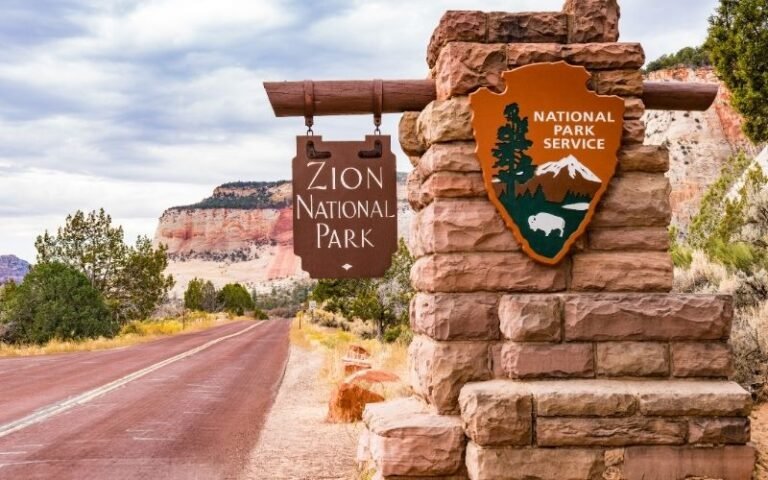
Aravind’s lifelong relationship with protected areas extended well beyond India. He was invited as a visiting researcher to multiple countries. In East Africa, he studied the dynamics of predator-prey systems in savannah ecosystems; in South America, he documented the challenges of deforestation in the Amazon; and in North America, he collaborated with rangers and scientists in Zion National Park, drawing parallels between global conservation challenges.
This international exposure convinced him that though ecosystems vary, the fundamental struggles, balancing development and preservation, integrating local communities, and mitigating climate change, were universal. His comparative writings helped policymakers understand India’s challenges within a global framework.
Major Achievements and Recognition
Over his career, Aravind Rao received numerous awards. The Padma Shri recognized his contributions to environmental education. UNESCO invited him to lead a working group on traditional ecological knowledge. His children’s book, Forest Whispers, was translated into six languages and introduced young readers to biodiversity through stories and illustrations.
Perhaps his most enduring legacy was the establishment of the “Green Horizons Foundation,” a non-profit dedicated to training the next generation of eco-leaders. Under his guidance, the foundation built field schools, organized citizen-science projects, and promoted digital platforms where villagers could share conservation practices.
Challenges and Personal Struggles
Aravind’s journey was not without obstacles. He faced resistance from industrial lobbies when he opposed mining projects near tiger corridors. Bureaucratic delays often frustrated his community-led initiatives. He endured health crises in his fifties, including malaria contracted during a field expedition.
He also grappled with self-doubt. In his memoir, Footprints in the Dust, Aravind confessed that he sometimes questioned whether his efforts could truly counter the scale of environmental destruction. Yet he always returned to the conviction that even small acts, planting a tree, rescuing an injured bird, teaching a child about nature, created ripples of change.

Later Life and Legacy
In his later years, Aravind retreated to a modest home near Coorg, surrounded by coffee plantations and bird-filled groves. Retirement did not mean inactivity; he continued writing, mentoring, and advocating through online forums.
He passed away peacefully in 2021 at the age of 73. Tributes poured in from across the world: scientists praised his interdisciplinary methods, villagers remembered his humility, and students cherished his ability to inspire curiosity.
Today, Aravind Rao is remembered not only as a conservationist but as a storyteller who connected hearts to habitats. His legacy reminds us that the fight for the environment is not the work of one lifetime but of generations.
Influence on Future Generations
Aravind’s influence can be seen in the rising number of youth-led ecological initiatives in South Asia. Many of his mentees went on to become wildlife biologists, environmental lawyers, and grassroots organizers. His philosophy of “science with empathy” continues to guide curriculum design in universities.
Globally, his comparative studies linking India’s experiences to those of Africa and America enriched cross-cultural dialogue. He proved that conservation was not a Western concept imported into the developing world, but a universal ethic rooted in every culture’s traditions.
Wrap Up
The biography of Aravind Rao is not just the story of one man, but of a vision, a belief that humanity thrives when nature thrives. His life illustrates how passion, education, and empathy can turn an ordinary child from a village into a global voice for the Earth.
In a century defined by ecological crises, his message remains urgent: that conservation is not optional, but essential for survival. And in remembering him, we are reminded that protecting forests, rivers, and species is also about protecting ourselves and the generations yet to come.
FAQs
Who was Aravind Rao?
Aravind Rao was an Indian conservationist, environmental educator, and author who dedicated his life to wildlife protection, sustainable development, and cultural ecology.
What were his major achievements?
He authored influential books, established the Green Horizons Foundation, advised governments on eco-policies, and pioneered community-led conservation models.
Which national parks did he work with?
He worked extensively in Indian reserves such as Kanha, Bandhavgarh, and Yashomati, while also collaborating internationally in East Africa, the Amazon, and Zion.
What was his conservation philosophy?
He believed in integrating science with traditional knowledge, empowering local communities, and fostering coexistence between humans and wildlife.
How did he inspire future generations?
Through mentorship, writings, and public education, he encouraged youth to see conservation not as a career niche but as a civic responsibility.
Citation
Wikipedia contributors. (2025, August 21). Yosemite National Park. Wikipedia, The Free Encyclopedia. https://en.wikipedia.org/wiki/Yosemite_National_Park

I am Ethan Miles, exploring the magic of Theme Parks and the beauty of Nature & Outdoors. From thrilling coasters to peaceful trails, I share honest tips, hidden gems, and immersive guides that inspire you to travel deeper and discover more. Whether you are chasing the rush of a roller coaster or the calm of a forest sunrise, my mission is simple to inspire you to explore with curiosity, depth, and joy.




One Comment